







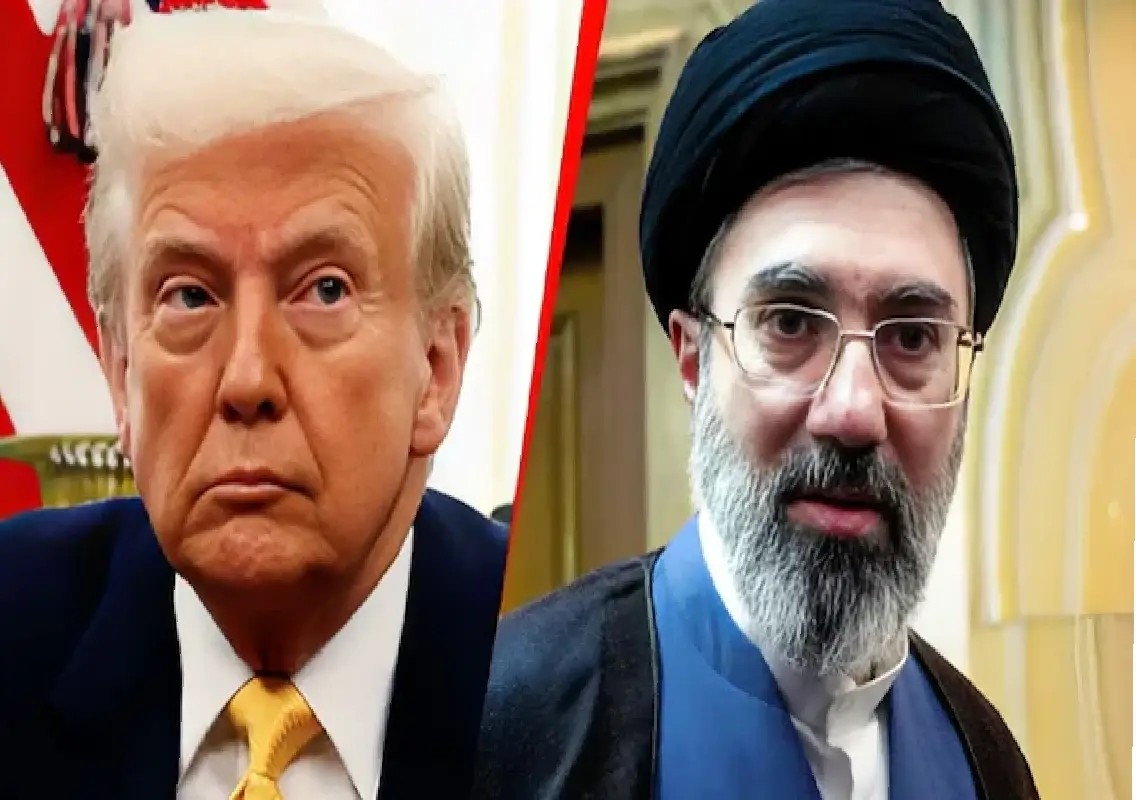


Washington, D.C.: Hopes for a return to stability in the Middle East have risen after United States President Donald Trump said Washington and Tehran are close to signing a landmark agreement that could extend a ceasefire, reopen the Strait of Hormuz and pave the way for negotiations on Iran’s nuclear programme.
While Trump expressed confidence that an agreement is imminent, Iran has maintained that no final deal has yet been approved, indicating that negotiations remain ongoing.
Trump says agreement is close
Speaking at the White House, Trump stated that the United States had reached what he described as a major settlement with Iran and that only final documentation remained before a formal agreement could be signed.
He indicated that a signing ceremony could take place within days, possibly in Europe, and suggested that the process was moving rapidly towards completion. Trump also claimed that key parties involved in the negotiations had broadly approved the framework of the proposed agreement.
However, Iranian Foreign Ministry spokesperson Esmaeil Baghaei said Tehran had not yet reached a final conclusion on the agreement and stressed that Iran would not compromise on its core negotiating positions.
Proposed agreement centres on 60-day truce
According to reports, negotiators have broadly agreed on a memorandum of understanding (MOU) that would extend the current ceasefire for 60 days while creating a framework for broader diplomatic talks. The truce could be extended by mutual consent if negotiations continue beyond the initial period.
The proposed arrangement is designed to prevent further military escalation and provide space for discussions on long-term regional stability and nuclear-related issues.
Strait of Hormuz reopening a key component
One of the most significant elements of the proposed agreement involves the reopening of the Strait of Hormuz, a vital shipping route through which a substantial portion of the world’s oil exports pass.
Under the reported framework, maritime traffic would resume without restrictions, tolls or transit fees. Iran would also be expected to remove obstacles affecting navigation and facilitate the return of commercial shipping to normal levels.
The reopening of the waterway is expected to ease concerns in global energy markets and improve regional trade flows if the agreement is implemented.
Sanctions relief and economic measures under discussion
The proposed framework reportedly includes sanctions waivers that would allow Iran to resume oil exports during the truce period. Additional economic relief measures could be linked to Iran’s compliance with the agreement and progress in future negotiations.
Negotiators are also discussing mechanisms that could provide Iran with access to some frozen assets and facilitate humanitarian purchases, although details remain under consideration.
Iran has consistently sought broader sanctions relief and greater access to overseas funds as part of any long-term settlement.
Nuclear programme remains central issue
A major focus of the negotiations is Iran’s nuclear programme. Trump has repeatedly stated that the United States’ primary objective is to ensure that Iran does not acquire nuclear weapons.
The proposed framework reportedly includes an Iranian commitment not to pursue nuclear weapons and establishes a process for negotiations on uranium enrichment and the future of Iran’s stockpile of highly enriched uranium. Any detailed implementation measures would likely require a separate and more comprehensive agreement.
Iran has long maintained that its nuclear programme is intended solely for peaceful purposes and has denied allegations that it seeks to develop nuclear weapons.
Challenges remain before final approval
Despite the optimism surrounding the negotiations, officials acknowledge that several issues remain unresolved and that formal approval is still required from both governments.
Previous rounds of negotiations have come close to completion before stalling, prompting observers to remain cautious about predicting a final outcome. Iranian officials continue to emphasise that no agreement has been formally accepted, while US officials have indicated that final decisions are still pending.
Diplomatic mediators from the region remain engaged in efforts to bridge remaining differences and finalise the text of the agreement.
Conclusion
The United States and Iran appear closer to a diplomatic breakthrough than at any point in recent months, with a proposed agreement centred on a 60-day ceasefire, the reopening of the Strait of Hormuz and future negotiations over Tehran’s nuclear programme. While President Trump has projected confidence that a deal is imminent, Iran insists that final approval has not yet been granted. The coming days are expected to determine whether the negotiations culminate in a formal agreement capable of reducing tensions and restoring stability across the region.
The US and Iran are reportedly nearing a deal involving a ceasefire extension, reopening of the Strait of Hormuz and nuclear negotiations.