


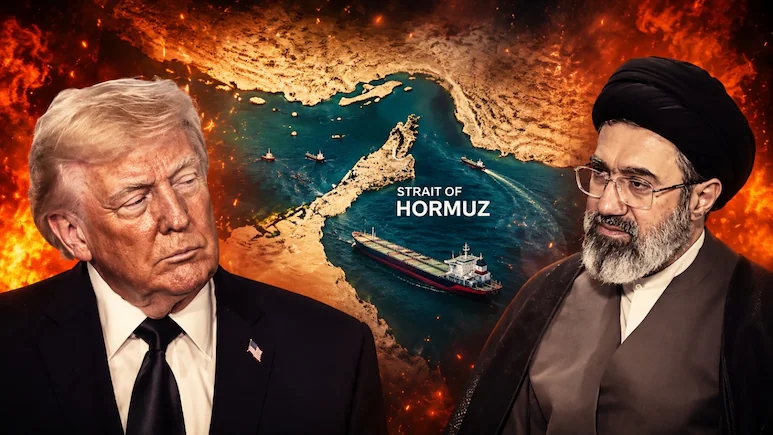


Doha: Indirect talks between the United States and Iran in Qatar have focused on frozen Iranian assets, a proposed crisis communication channel and the future of the strategically important Strait of Hormuz, as both sides work towards implementing an agreement intended to halt the conflict.
Iranian Deputy Foreign Minister Kazem Gharibabadi announced the conclusion of the latest round of technical discussions in Doha on July 1, saying the participants had agreed to establish a communication channel to report and document alleged violations of the memorandum of understanding (MoU).
The negotiations also addressed the possible release and use of frozen Iranian funds. Reports indicated that an initial agreement involving $3 billion had been discussed, although the broader arrangements concerned an initial pool of approximately $6 billion. Iran has linked progress on the release of funds to the implementation of the agreement.
However, a US official said no frozen assets had actually been released and that Washington would retain control over the conditions governing any disbursement.
Communication channel proposed to monitor agreement
One of the principal outcomes announced by Gharibabadi was an agreement to establish a formal communication mechanism for reporting and recording violations of the MoU.
The Iranian deputy foreign minister said the channel would allow shortcomings in the implementation of the agreement to be documented and addressed through an established process.
The proposal is intended to provide a means for the parties to raise concerns and seek clarification without allowing disputes over alleged violations to derail the wider diplomatic effort.
Iran had raised what it described as US breaches of the agreement, including concerns about military deployments and statements by American officials. These remain allegations made by Tehran rather than independently established findings.
The communication mechanism is therefore an important part of the implementation process, although its effectiveness will depend on whether the parties use it to resolve disputes and comply with their commitments.
Frozen Iranian funds remain a major issue
The possible release of frozen Iranian assets was another central subject of the Doha discussions.
Gharibabadi said Iranian and Qatari officials, including representatives of Qatar’s central bank, had discussed arrangements for using part of an initial $6 billion in frozen funds to purchase goods required by Iran.
According to the Iranian official, the purchases would be based on the country’s stated needs, with the required goods subsequently made available to Iran.
Reports also referred to a proposed initial release of $3 billion, with Tehran seeking to link the timing and extent of any release to progress at successive stages of negotiations.
The figures relate to discussions about the use and possible release of frozen assets; they do not establish that the money has been transferred.
A US official said no funds had been released and that any disbursement would depend on Iran meeting the requirements set out in the MoU. Washington also maintained that it would have a say in how the money was used.
Washington wants funds used for American goods
The United States has sought conditions on how any Iranian assets made available under the arrangement would be spent.
According to the US official cited in reports, the money would be directed towards purchasing American agricultural products to help feed the Iranian population.
This position differs in emphasis from Iran’s description of the arrangement, which focused on purchasing goods according to the country’s declared requirements.
The difference highlights a key challenge in implementing the financial provisions of the MoU: even if both sides agree in principle to a release, they must still settle the conditions governing the funds and the mechanism through which purchases are made.
Until those details are resolved and the necessary conditions are met, the reported agreement should not be interpreted as confirmation that Iran has regained access to the money.
Strait of Hormuz remains a point of disagreement
The future of the Strait of Hormuz also featured in discussions involving Iran, Qatar and Pakistan on the sidelines of the Doha meetings.
The narrow waterway is a critical route for international oil and gas shipments, making its security and accessibility central to efforts to reduce tensions in the region.
According to reports citing regional sources, Iran argued that Israel’s continued military presence in Lebanon undermined the broader agreement. Tehran also maintained that the Strait of Hormuz falls under Iranian and Omani sovereignty.
Iran reportedly sought the implementation of five provisions of the MoU before moving on to other issues. An Omani proposal concerning the strait remained under discussion, with negotiating delegations expected to return to their respective capitals for consultations.
These positions illustrate the difficulty of implementing an agreement that involves multiple theatres of conflict and disputes over maritime access, military activity and the sequencing of commitments.
Qatar and Pakistan continue mediation efforts
Qatar and Pakistan have played important roles in facilitating communication between Washington and Tehran.
The Doha meetings formed part of a broader effort to implement the MoU and address practical issues arising from the agreement. Rather than bringing the two sides together for direct negotiations, the process has relied on intermediaries and separate discussions.
Qatar has also been involved in consultations concerning the frozen funds, including discussions with Iranian officials and its central bank.
The involvement of regional mediators provides a channel for both sides to exchange proposals and address disagreements. However, mediation alone cannot guarantee that the parties will agree on the interpretation or implementation of each provision.
The latest discussions indicate that technical arrangements are being considered, but major questions remain over the release of funds, maritime security and allegations of non-compliance.
What happens next?
The Doha talks produced proposals for a communication mechanism and further discussions on frozen Iranian assets and the Strait of Hormuz. They did not, however, resolve every disagreement surrounding the MoU.
The proposed release of funds remains conditional, and the US position that no assets have yet been disbursed underscores the gap between an agreement in principle and its actual implementation.
The communication channel could help manage disputes over alleged violations, while further consultations on the Strait of Hormuz may determine whether a workable arrangement can be reached on maritime access and security.
For now, the negotiations represent an effort to manage the immediate consequences of the conflict through technical discussions and regional mediation. Their success will depend on whether Washington and Tehran can turn the understandings reached in Doha into verifiable steps towards de-escalation.