







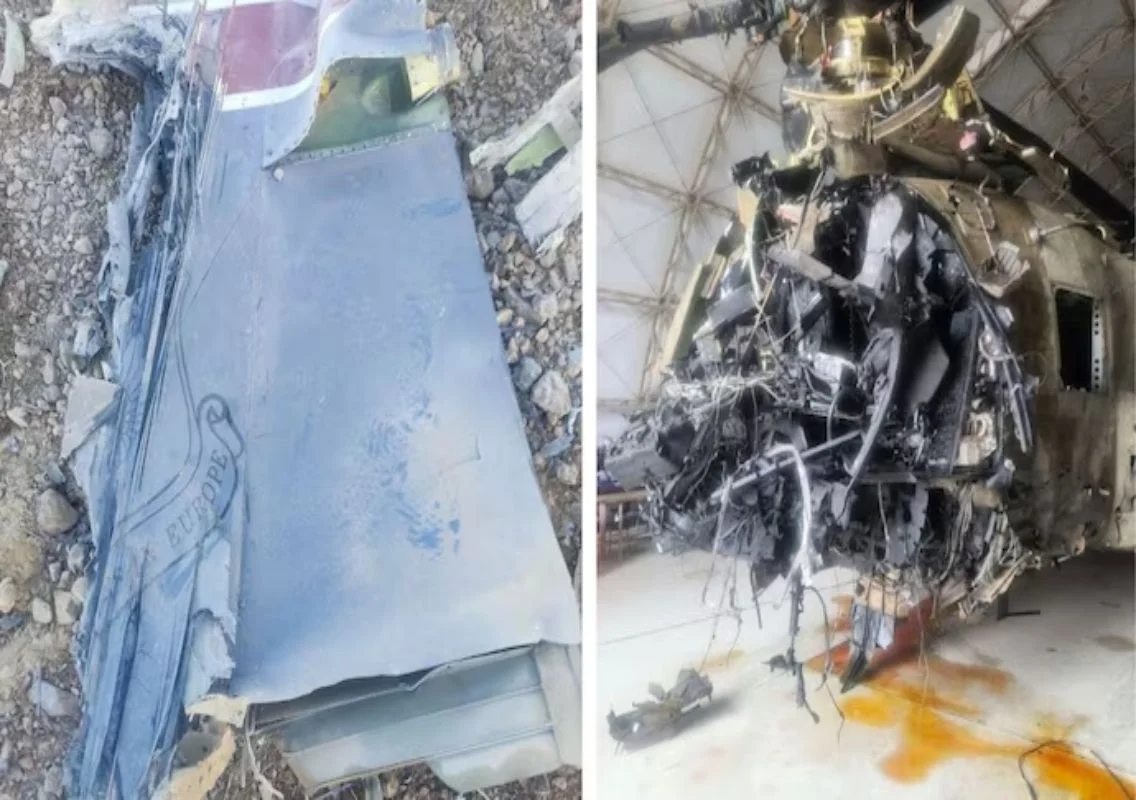


Tehran: The ongoing conflict between the United States and Iran has entered a dangerous new phase after two American warplanes were shot down within 24 hours, alongside attacks on rescue helicopters and multiple aircraft emergencies. The incidents have not only raised concerns over the safety of US personnel but have also challenged earlier claims of American air superiority in the region.
According to US and Iranian officials, the losses mark the first confirmed instances of US aircraft being brought down since the war began on February 28. The developments have intensified fears of escalation, with a missing American pilot reportedly on the run inside Iranian territory.
Scale of losses raises alarm
The past 24 hours have proven to be one of the most difficult periods for US air operations in the conflict so far. A range of aircraft, including fighter jets, attack planes, and rescue helicopters, were either hit, forced into emergency situations, or destroyed.
A US F-15E Strike Eagle was shot down over Iran during combat operations. While one crew member was successfully rescued, the second remains missing, prompting urgent search-and-rescue efforts.
In a separate incident, a US A-10 Warthog attack aircraft was hit and crashed over Kuwait. The pilot ejected safely and was later recovered. Additionally, two A-10 aircraft were reported to have taken fire, with one severely damaged but able to return to base.
The situation extended further across the fleet, with an F-16 forced into an emergency landing and one to two KC-135 refuelling tankers declaring in-flight emergencies. These incidents collectively point to growing operational risks in the airspace over Iran and surrounding regions.
Rescue mission comes under attack
Efforts to recover the missing F-15E crew member have proven highly dangerous. Two US HH-60W Jolly Green II helicopters, deployed as part of the rescue mission, came under Iranian fire during operations inside hostile territory.
Despite sustaining damage, both helicopters managed to exit Iranian airspace, with reports suggesting possible injuries among crew members. The attack highlights the increasing risks faced not only by combat aircraft but also by rescue teams operating in contested zones.
Military analysts note that such missions are among the most complex and vulnerable operations during active conflict, particularly when conducted deep inside enemy territory.
Iran intensifies search for missing pilot
Iran has launched a large-scale search operation for the missing US pilot, believed to be in the country’s southwest region. Authorities, including the Islamic Revolutionary Guard Corps, have mobilised forces and issued public calls for civilians to assist.
Officials have reportedly offered rewards for information leading to the capture of the pilot, further escalating tensions. Iranian political leaders have framed the development as a significant turning point in the conflict.
Statements from senior leadership suggest a shift in focus, with the hunt for US personnel becoming a symbolic and strategic objective.
US response and political stance
US President Donald Trump has been closely monitoring the situation, receiving real-time updates from defence officials.
When questioned about the impact of the incidents on ongoing tensions, Trump downplayed their significance, stating that such developments are part of wartime realities. However, the Pentagon and US Central Command have yet to release detailed public assessments of the losses.
The incidents complicate earlier assertions by US leadership that American forces maintained near-total control over Iranian airspace.
Air superiority claims under scrutiny
Just days before the aircraft were downed, US officials had indicated that their forces could operate freely over key Iranian regions, including Tehran.
However, the recent losses have raised serious questions about that assessment. Defence experts point out that even weakened air defence systems can pose significant threats, particularly through mobile missile platforms and coordinated ground fire.
The events suggest that Iran retains the capability to challenge advanced aerial operations, especially in contested environments.
Wider conflict shows no sign of slowing
The broader war continues to escalate, with no immediate signs of de-escalation. Diplomatic efforts to restart negotiations have stalled, with Iran rejecting outreach attempts facilitated by regional intermediaries.
The conflict, which began following US and allied strikes earlier this year, has already resulted in thousands of casualties and injuries to hundreds of US personnel.
Beyond direct combat, the war has spread across the Middle East, with Iran targeting US-aligned nations and Israel through missile and drone strikes.
Regional and global impact grows
The escalation has heightened instability across the region, particularly in Gulf countries. Attacks on critical infrastructure, including energy facilities, have raised concerns about long-term economic consequences.
Global oil prices have surged amid fears of prolonged disruption, adding pressure to international markets and increasing uncertainty for energy-dependent economies like India.
Security analysts warn that continued escalation could draw in more regional actors, further complicating the conflict and increasing the risk of a broader war.
Conclusion
The downing of US aircraft and the ongoing search for a missing pilot mark a critical turning point in the Iran conflict. The incidents underscore the limits of air power in contested environments and highlight the growing risks faced by military personnel.
As tensions escalate and both sides intensify operations, the situation remains highly volatile. With no clear path to resolution, the conflict appears set to deepen, carrying significant implications for regional stability and global security.