


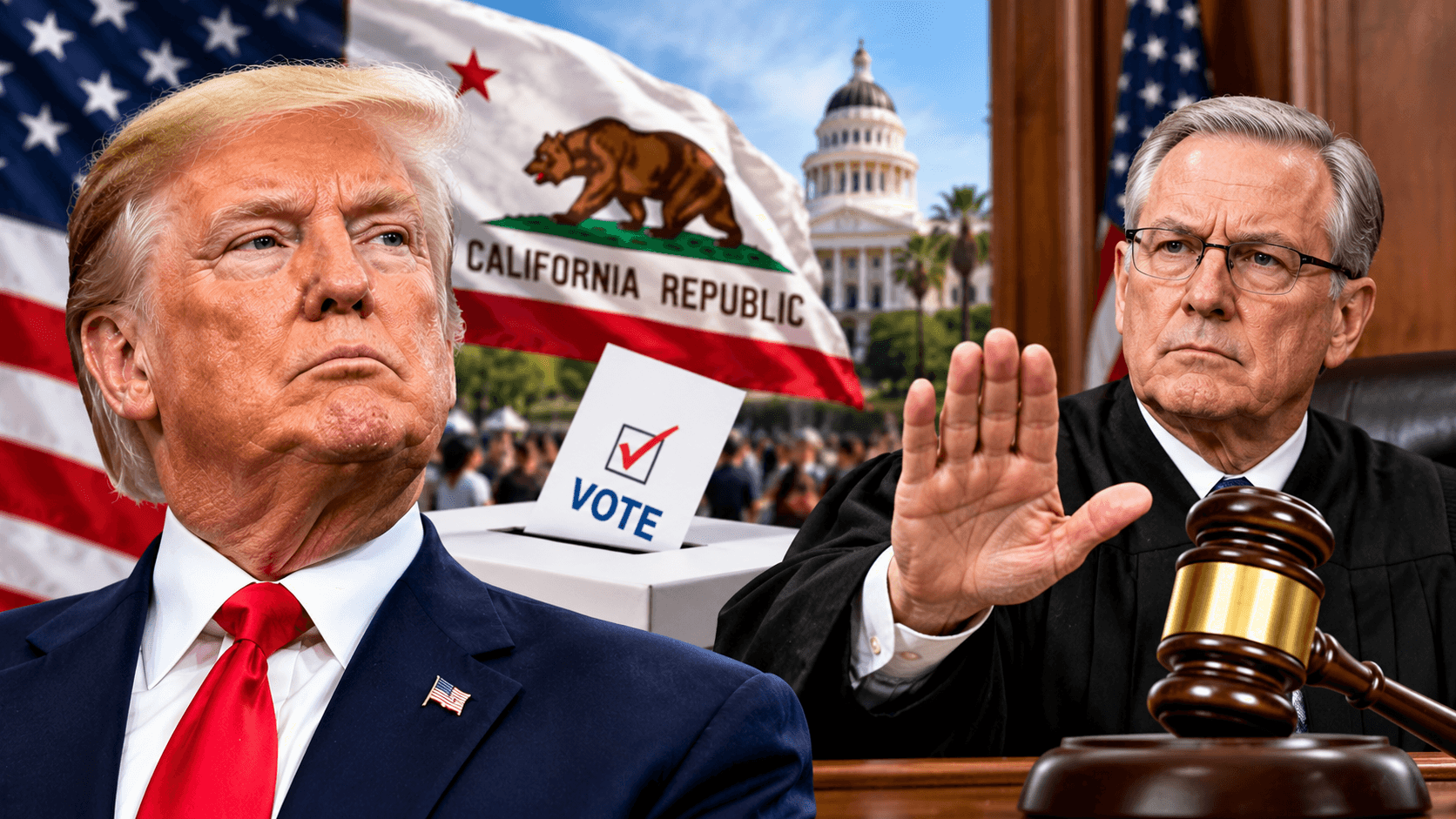


Washington: A US federal judge has ordered the Trump administration to stop requiring California election officials to segregate ballots cast by voters listed in federal records as suspected noncitizens. The ruling, delivered on Monday, November 2, came a day before the November 3 US midterm elections and upheld California’s authority to decide how it verifies the citizenship of registered voters.
US District Judge James Boasberg found that the federal government’s lists contained errors and included people who had been wrongly identified as noncitizens. He ruled that the administration could not unilaterally require the state to follow its preferred procedures for checking voter citizenship.
The decision came amid a wider dispute between the federal government and California over election administration and the handling of ballots from registered voters whose citizenship had been questioned by federal officials.
Judge says federal government cannot dictate California’s procedures
Boasberg said California could determine the procedures it uses to verify the citizenship of registered voters. He also held that the executive branch lacked authority to impose its preferred verification process on the state.
The case was brought by the Coalition for Humane Immigrant Rights, which challenged the federal administration’s authority to pressure county election officials over the lists of suspected noncitizens. The group argued that the demands could put eligible voters, including recently naturalised US citizens who may have been incorrectly identified, at risk of being denied their right to vote. Investing.com+1
The judge found that the federal lists were flawed and included people who were wrongly identified as noncitizens. His order restricts the administration from demanding that California election officials segregate ballots on the basis of those lists. Reuters+1
Supreme Court separately rejects bid to set aside 20,000 ballots
The ruling came on the same day that the US Supreme Court rejected a separate emergency request by the Trump administration seeking to stop California from counting mail-in ballots from more than 20,000 registered voters whom federal officials had identified as likely noncitizens.
The Supreme Court declined the Justice Department’s request for an injunction that would have required California election officials to set aside the disputed ballots until the voters’ citizenship could be verified. The court issued a brief, unsigned order and recorded no noted dissents. CBS News+1
The two legal developments arose from related disputes but involved separate proceedings. Boasberg’s order barred the administration from making demands that California segregate ballots based on its lists. The Supreme Court, meanwhile, rejected the administration’s request for emergency intervention in the separate case seeking to prevent the state from counting the ballots.
The federal government had argued that its review identified more than 20,000 people who were likely noncitizens and appeared on California’s voter rolls. It asked state and county officials to review the names and keep ballots from those voters separate until their citizenship status could be established. United States Department of Justice+1
California officials raised concerns about accuracy of federal lists
California officials questioned the reliability of the federal government’s list and raised concerns that eligible voters could be wrongly identified.
The state argued that the administration had not adequately explained the methodology used to compile the list. Officials also warned that separating ballots based on potentially inaccurate information could disrupt election procedures and risk preventing eligible citizens from having their votes counted.
The concern was particularly significant for naturalised US citizens, who could potentially be incorrectly flagged by data-matching systems. The Coalition for Humane Immigrant Rights also argued that the federal demands could unlawfully disenfranchise voters whose citizenship had been wrongly questioned. Investing.com+2
The Justice Department, on the other hand, maintained that it had identified people it believed were ineligible to vote and that election officials should verify their citizenship before counting their ballots. Federal authorities have said that noncitizens are prohibited from voting in US federal elections. United States Department of Justice+1
Dispute unfolds ahead of crucial US midterm elections
The court decisions came on November 2, just a day before the November 3 midterm elections, in which voters were set to decide control of both chambers of Congress.
President Donald Trump’s fellow Republicans were seeking to retain their majorities in the House of Representatives and the Senate. The dispute over California’s voter lists added another legal confrontation to the broader debate over election administration and federal authority ahead of polling.
The California case also highlights the division of responsibilities between federal and state authorities. While federal law prohibits noncitizens from voting in elections for federal offices, the administration’s attempt to require state officials to segregate ballots based on its lists faced legal challenges over the accuracy of the information and the limits of executive authority.
Boasberg’s ruling did not prevent federal authorities from investigating suspected cases of illegal voting. Instead, it addressed whether the executive branch could unilaterally require California to adopt its preferred procedures for verifying the citizenship of registered voters and handling their ballots. Axios+1
The decisions therefore leave California election officials to follow the state’s existing procedures rather than comply with the administration’s demands to segregate ballots based on the disputed federal lists. The legal dispute has placed the accuracy of voter records, protection of eligible voters and the division of election-related powers between state and federal governments at the centre of the debate.