







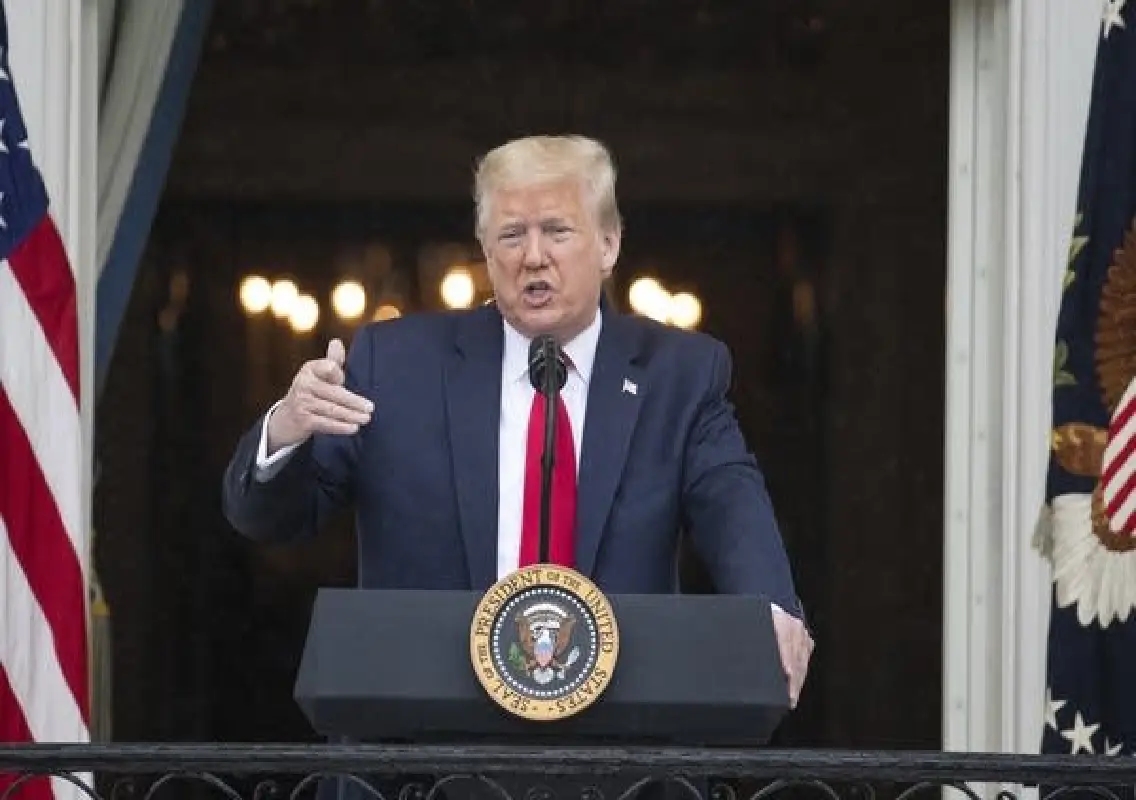


Washington: The US Supreme Court on Tuesday dealt a significant setback to President Donald Trump’s aggressive immigration and law-and-order agenda by blocking his attempt to deploy National Guard troops on the streets of Chicago, ruling that the administration had failed to establish clear legal authority for such a move.
Supreme Court upholds lower court ban
In an unsigned order, the conservative-majority Supreme Court declined to lift a lower court ruling that bars the deployment of National Guard troops in the Illinois city for now. The court said that, at this preliminary stage, the Trump administration had not been able to identify a lawful basis to justify the domestic use of the military to enforce laws in the state.
“At this preliminary stage, the Government has failed to identify a source of authority that would allow the military to execute the laws in Illinois,” the court said in its order. The decision effectively keeps troops off the streets of Chicago while the broader legal challenge continues to move through the courts.
Three conservative justices — Samuel Alito, Clarence Thomas and Neil Gorsuch — dissented from the majority decision, signalling a division within the court over the scope of presidential powers in deploying the National Guard domestically.
Rare defeat for Trump at top court
The ruling marks a rare loss for President Trump at the Supreme Court, where conservatives hold a 6–3 majority. Throughout his presidency, Trump has often relied on the court to back executive actions, particularly on immigration and national security. However, Tuesday’s decision underscores judicial unease over the domestic use of military forces without clear statutory backing.
The Trump administration had made an emergency appeal to the Supreme Court after two lower courts blocked the proposed deployment in Chicago. Those courts found that the administration had overstepped its authority by attempting to send troops into a state without the consent of its leadership and without a legally sound justification.
Administration defends deployment rationale
Reacting to the Supreme Court’s decision, White House spokeswoman Abigail Jackson defended the president’s actions, saying the deployment was aimed at protecting federal law enforcement officers and property.
“The president activated the National Guard to protect federal law enforcement officers, and to ensure rioters did not destroy federal buildings and property,” Jackson said. She added that “nothing in today’s ruling detracts from that core agenda,” indicating that the administration may continue to pursue similar measures elsewhere.
In its filing before the court, Solicitor General John Sauer argued that federal agents in Chicago were being “forced to operate under the constant threat of mob violence.” He contended that the lower court orders blocking the deployment improperly interfered with the president’s authority and put federal personnel and property at risk.
Illinois leadership welcomes decision
The ruling was welcomed by Illinois Governor JB Pritzker, a Democrat who had strongly opposed the deployment alongside Chicago’s Democratic mayor. Pritzker described the decision as a victory not just for the state, but for democratic principles more broadly.
“This is a big win for Illinois and American democracy,” the governor said in a statement. “This is an important step in curbing the Trump Administration’s consistent abuse of power and slowing Trump’s march toward authoritarianism.”
State officials have repeatedly argued that law enforcement within Illinois is capable of handling public order issues without federal military intervention, and that the deployment of National Guard troops would only escalate tensions.
Broader legal implications across states
The Supreme Court’s refusal to grant the emergency appeal leaves unanswered questions about how similar cases will be resolved in other parts of the country. Trump has already deployed National Guard troops to three Democratic-led cities this year — Los Angeles, Washington and Memphis — as part of his broader crackdown on protests and immigration-related unrest.
Efforts to deploy troops in Portland and Chicago, however, have faced stiff resistance in the courts. Democratic-ruled states have argued that such deployments represent an extraordinary and unlawful expansion of presidential power.
California and Oregon have both filed legal challenges against the Trump administration’s use of the National Guard within their borders. In California, Trump sent troops to Los Angeles earlier this year to quell demonstrations sparked by a federal crackdown on undocumented migrants. A district court judge ruled the move unlawful, but an appeals court panel later allowed the Los Angeles deployment to proceed, highlighting the legal uncertainty surrounding the issue.
Troops remain inactive for now
Despite the Supreme Court’s order, around 300 National Guard troops remain activated in the Chicago area. However, they are not currently engaged in operations and are effectively sidelined while the legal battle continues.
Legal experts say the case could have far-reaching consequences for the balance of power between the federal government and states, particularly in situations involving civil unrest and immigration enforcement. The central question remains whether a president can unilaterally deploy military forces within a state without its consent and without explicit authorisation from Congress.
Conclusion
The Supreme Court’s decision to block the National Guard deployment in Chicago represents a notable check on executive power at a time of heightened political and social tensions in the United States. While the ruling does not permanently bar such deployments, it signals that courts will closely scrutinise attempts to use the military for domestic law enforcement. As related cases continue in other states, the issue is likely to remain a flashpoint in debates over federal authority, civil liberties and the limits of presidential power.