









New Delhi: Pakistan has taken another step towards granting provincial status to Gilgit-Baltistan, a region that forms part of the larger Jammu and Kashmir dispute between India and Pakistan. The development follows the unanimous passage of a resolution by the Gilgit-Baltistan Legislative Assembly, urging Pakistan’s federal government to amend the Constitution and formally recognise the region as the country’s fifth province.
The proposal has once again brought the long-standing territorial dispute into focus, with India strongly rejecting the move and reiterating that the entire Union Territories of Jammu and Kashmir and Ladakh, including Gilgit-Baltistan, are integral parts of India.
If approved by Pakistan’s Parliament, the move would represent one of the most significant constitutional changes concerning the region since Pakistan assumed administrative control over it after the first Indo-Pakistan war in 1947–48.
What is Gilgit-Baltistan?
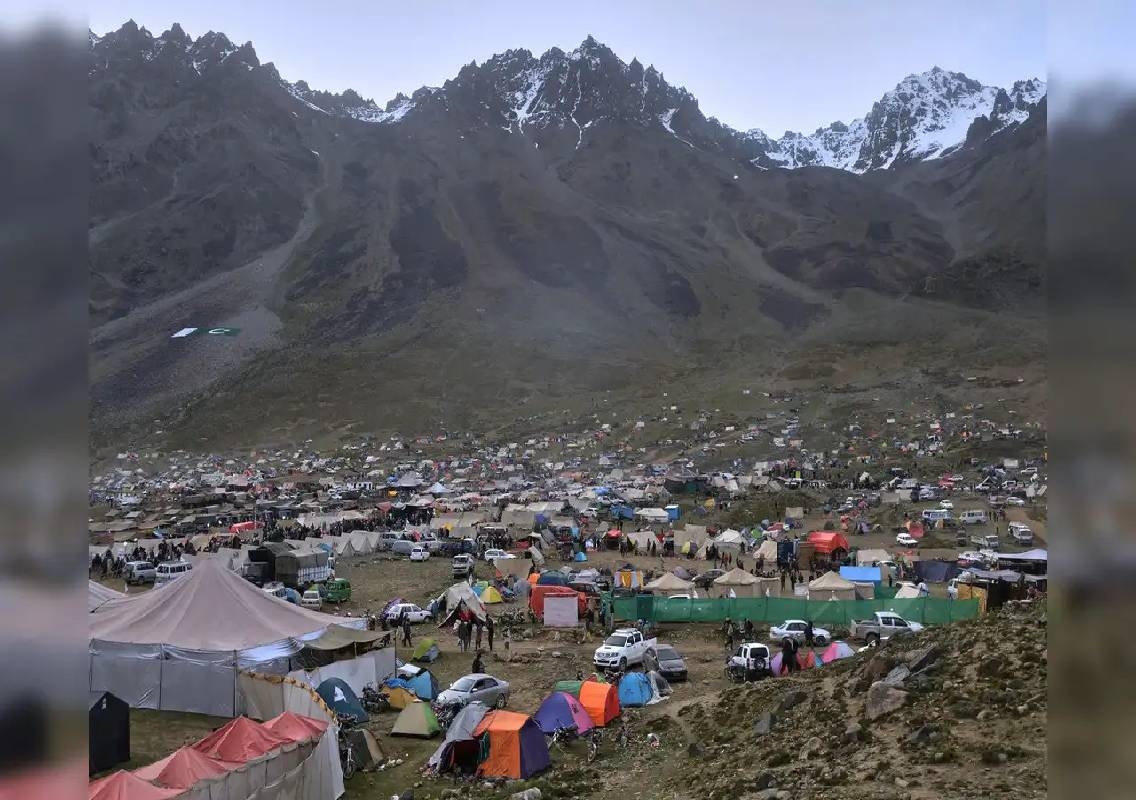
Gilgit-Baltistan is a strategically important mountainous region located in the northern part of the erstwhile princely state of Jammu and Kashmir.
The region borders China, Afghanistan and India’s Union Territory of Ladakh, making it geopolitically significant.
Although Pakistan administers Gilgit-Baltistan, it has never been granted full constitutional provincial status. Instead, it is governed under a self-governance framework that provides limited legislative and administrative powers.
India, however, considers the region part of the erstwhile princely state of Jammu and Kashmir that legally acceded to India in 1947.
What does the latest resolution seek?
The resolution passed by the Gilgit-Baltistan Legislative Assembly calls upon Pakistan’s federal government to amend the country’s Constitution and grant the region full provincial status.
If implemented, Gilgit-Baltistan would become Pakistan’s fifth province, joining:
- Punjab
- Sindh
- Balochistan
- Khyber Pakhtunkhwa
The proposal also seeks:
- Representation in Pakistan’s National Assembly
- Representation in the Senate
- Equal constitutional rights enjoyed by citizens of Pakistan’s existing provinces
- Greater participation in federal institutions
At the same time, the resolution reportedly includes constitutional safeguards stating that provincial status would remain subject to any future settlement of the Jammu and Kashmir dispute in accordance with Pakistan’s stated international commitments.
Why does Pakistan want provincial status?
The latest proposal comes against the backdrop of political and security challenges within Pakistan.
The country is currently dealing with:
- Rising militant attacks in Khyber Pakhtunkhwa
- Continued unrest in Balochistan
- Political uncertainty following recent developments across several provinces
Granting provincial status to Gilgit-Baltistan is seen by many observers as an attempt to provide constitutional clarity, improve governance and extend greater political rights to residents of the region.
The latest move also follows the June 7 elections to the Gilgit-Baltistan Assembly, after which Bilawal Bhutto Zardari’s Pakistan Peoples Party (PPP) emerged as the largest party and later formed a coalition government with Prime Minister Shehbaz Sharif’s Pakistan Muslim League-Nawaz (PML-N).
Following the formation of the coalition government, the Assembly adopted the resolution and forwarded it to Pakistan’s Parliament for further consideration.
Not the first attempt
Pakistan has previously explored granting provincial status to Gilgit-Baltistan.
The issue gained renewed attention after India revoked Article 370 and Article 35A in August 2019 and reorganised the erstwhile state of Jammu and Kashmir into the Union Territories of Jammu and Kashmir and Ladakh.
At that time, Pakistan also discussed making Gilgit-Baltistan a province, but the proposal did not move forward during the government led by former Prime Minister Imran Khan.
The latest resolution represents another attempt to formalise the region’s constitutional status within Pakistan.
Why India opposes the move
India has categorically rejected Pakistan’s proposal.
Responding to media queries, Ministry of External Affairs (MEA) spokesperson Randhir Jaiswal reiterated India’s long-standing position that Gilgit-Baltistan is an integral part of India.
He said India does not recognise any unilateral attempt by Pakistan to alter the status of territories under what New Delhi describes as Pakistan’s illegal occupation.
According to the MEA, any administrative or constitutional changes made by Pakistan in Pakistan-occupied Kashmir, including Gilgit-Baltistan, have no legal validity.
India has consistently maintained that the entire territory of the former princely state of Jammu and Kashmir, including Gilgit-Baltistan, legally acceded to India in 1947.
Why the issue matters
Gilgit-Baltistan occupies a strategically sensitive location.
The region hosts sections of the China-Pakistan Economic Corridor (CPEC), a flagship infrastructure project under China’s Belt and Road Initiative, and serves as an important transit corridor linking western China with Pakistan.
Any constitutional change affecting the region is therefore closely watched by India and the international community due to its implications for regional security and the broader Kashmir dispute.
Legal experts also note that any decision to formally integrate Gilgit-Baltistan into Pakistan’s constitutional framework could further complicate the long-standing territorial dispute between India and Pakistan.
Conclusion
Pakistan’s latest move to grant provincial status to Gilgit-Baltistan represents a significant constitutional proposal with far-reaching political and diplomatic implications. While Islamabad argues that the measure would extend constitutional rights and representation to the region’s residents, India has firmly rejected the proposal, maintaining that Gilgit-Baltistan remains an integral part of its territory. The issue is likely to remain a key point of contention between the two neighbours as Pakistan’s Parliament considers the proposal.