







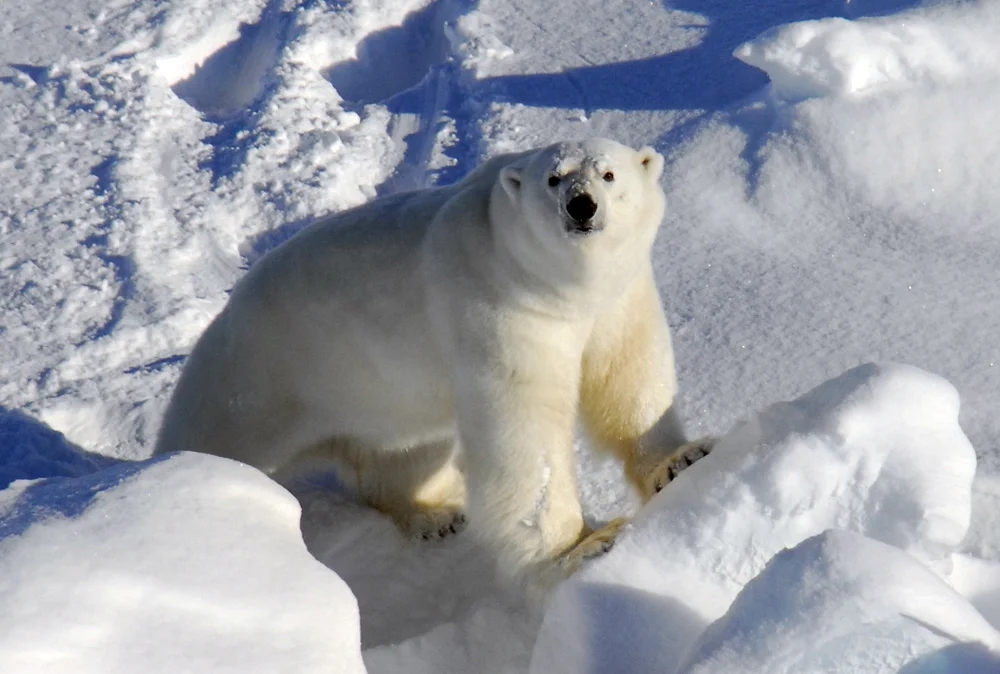


Researchers have identified striking DNA changes in polar bears that appear to be linked directly to the warming climate—findings believed to be the first statistically significant link between rising temperatures and altered DNA in any wild mammal species. As global heating threatens the species’ survival, this discovery offers both scientific insight and urgent reminders of the consequences of climate breakdown.
Polar bears, long considered a symbol of the Arctic, face rapidly worsening conditions. Scientists estimate that two-thirds of the world’s polar bear population could disappear by 2050 as sea ice melts at unprecedented rates. Yet a new study by the University of East Anglia suggests that some populations may be attempting to adapt genetically to their changing environment.
How “jumping genes” reveal adaptation
The research team analysed blood samples from polar bears in two regions of Greenland. By focusing on “jumping genes”—mobile pieces of DNA that can influence how other genes behave—scientists were able to compare genetic activity between groups living in colder northern regions and those inhabiting the warmer, more variable south-east.
Dr Alice Godden, the lead researcher, explained: “DNA is the instruction book inside every cell, guiding how an organism grows and develops. By comparing these bears’ active genes to local climate data, we found that rising temperatures appear to be driving a dramatic increase in the activity of jumping genes within the south-east Greenland bears’ DNA.”
These genetic changes were particularly pronounced in genes linked to heat stress, metabolism and ageing. Because local climates and diets differ significantly between regions, the study suggests that the animals’ DNA may be adjusting in response to new environmental pressures.
Diet, climate and survival
In south-east Greenland, where the climate is warmer and sea ice is less stable, polar bears rely more on rough, plant-based foods compared with the fatty, seal-rich diets of northern populations. The researchers found that certain DNA hotspots related to fat processing showed notable shifts—changes that might help the bears survive in conditions where food is scarce or nutritionally poorer.
Dr Godden noted: “This finding is important because it shows, for the first time, that a unique group of polar bears in the warmest part of Greenland are using ‘jumping genes’ to rapidly rewrite their own DNA, which might be a desperate survival mechanism against melting sea ice.”
Such accelerated genetic change is consistent with what scientists already know: environmental stress can speed up natural shifts in DNA. However, seeing this happen in a large wild mammal—and in direct relation to temperature changes—is unprecedented.
Why this discovery matters
The study, published in the journal Mobile DNA, highlights the importance of tracking how different polar bear populations respond to warming. Scientists believe these findings could help identify which groups are more resilient and which are dangerously vulnerable, informing long-term conservation strategies.
With 20 known polar bear populations globally, researchers plan to extend their work to assess whether similar patterns of genetic change are emerging elsewhere. Their findings could shape future global policies on wildlife protection, biodiversity management and climate mitigation—mirroring ongoing conversations in Karnataka on environmental resilience, such as those highlighted in this report on conservation action and this piece on climate-related adaptation.
For background on the species, readers can explore the Wikipedia page on polar bears.
Hope—and caution
While the discovery offers glimmers of adaptation, scientists emphasise that genetic change alone cannot save the species. With Arctic temperatures rising four times faster than the global average, polar bears remain at extreme risk.
Godden warned: “We cannot be complacent, this offers some hope but does not mean that polar bears are at any less risk of extinction. We still need to be doing everything we can to reduce global carbon emissions and slow temperature increases.”
The research reinforces a central message: although evolution can offer temporary resilience, it cannot outpace unchecked global warming.