







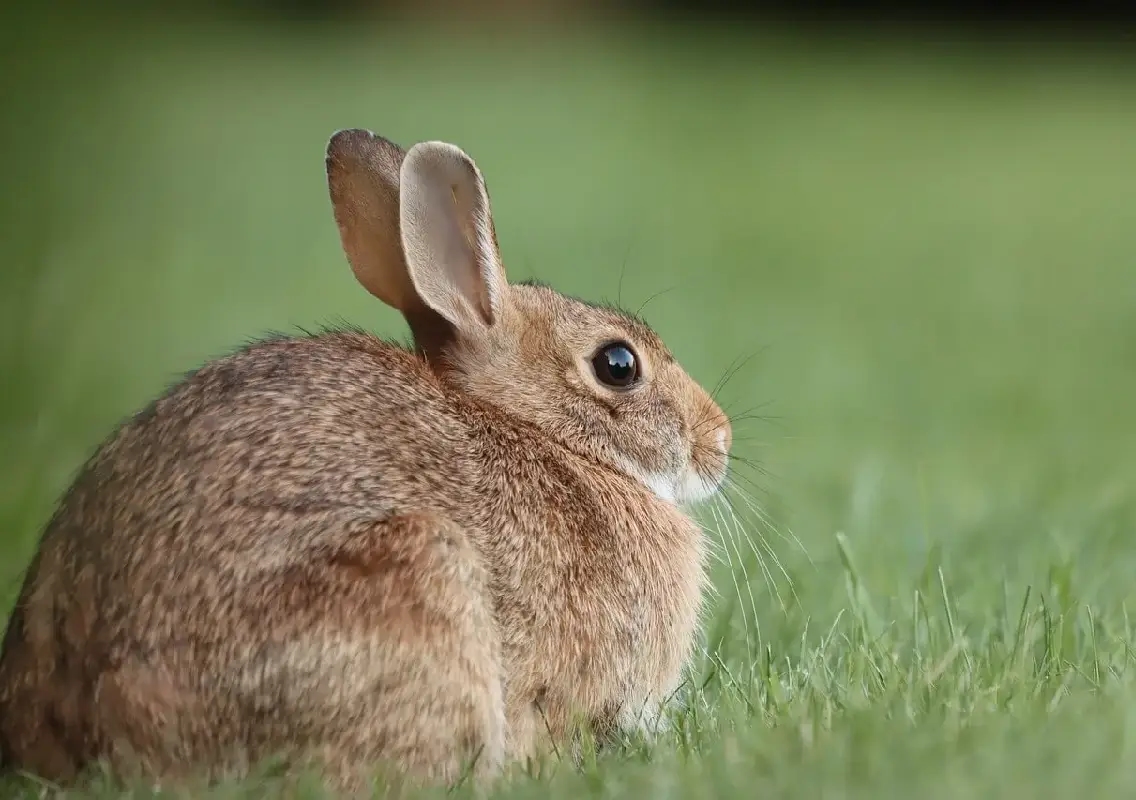


At first glance, it can look alarming. A rabbit gives birth and then seemingly disappears, leaving her tiny, blind babies alone in a shallow nest. But this behaviour is not abandonment. It is one of nature’s most effective survival strategies.
Hidden nests, not buried babies
Mother rabbits do not bury their young underground in the literal sense. Instead, they create shallow nests, often just beneath soil or grass, and carefully cover them with fur, leaves and earth. This makes the nest almost invisible. The aim is simple: protection from predators. Because rabbits are prey animals, a mother staying nearby would actually increase the risk of discovery.
Why mothers stay away
Unlike animals that constantly guard their offspring, rabbits limit contact to just once or twice a day. The mother briefly returns to nurse her babies—usually at dawn or dusk—then reseals the nest and leaves again. This reduces scent, sound and movement, all of which predators use to locate prey.
Though the nest may look sealed, it is not airtight. The soil is loosely packed, allowing airflow, while grass and plant material help regulate temperature. The mother also lines the nest with her own fur to keep the babies warm.
Born helpless, raised fast
Baby rabbits are born blind, hairless and completely dependent. Within about a week, their eyes open. By three to four weeks, they are strong enough to leave the nest and survive independently. This short, low-contact upbringing is crucial during their most vulnerable stage.
Wild versus pet rabbits
Wild rabbits commonly rely on concealed ground nests. Domestic rabbits, especially those kept indoors, usually build nests using hay and fur rather than soil. Even so, the instinct to limit contact with newborns remains strong.
What humans should do
If you come across a rabbit nest, the best response is to leave it undisturbed. A quiet, untouched nest usually means the mother’s strategy is working.
What appears to be neglect is, in reality, careful planning—proof that sometimes, staying away is the most protective act of all.
#wildlifebehaviour, #rabbits, #animalparenting, #naturefacts, #newskarnataka